More on the idea of ‘home’

Perusing the drafts folder in my e-mail, I came across an excerpt from Svetlana Boym’s book, “The Future of Nostalgia.” I met Ms. Boym, a Harvard professor, in Boston a few months back and we chatted over coffee about nostalgia, its post 9/11 manifestation in the West (her book came out just before and she said she’d revise some themes today) and other pretentious-sounding topics.

It was a pleasant late-afternoon, one of those dominated by concepts rather than facts. For some reason I believe Thursday is the ideal afternoon for concepts to trump facts. That being said, here’s more theoretical ranting on the idea of “home.”

When exiles return “back home” they occasionally realize that there is nothing homey back there, and that they feel more at home in the exilic retreat that they have learned to inhabit. The exile became home, and it is the experience of returning to the country of birth that might become unsettling.

One shouldn’t ask writers in exile whether they plan to go back; it is condescending, and presumes that the biography of a nation carries more weight than the biography of an individual and his eccentric imagined community. The tear of nostalgia is not a tear of return; one doesn’t become one with the object of longing.

When Transience met Permanence

The booming sound of the giant speakers was pounding us all.

I’ve been tortured by concert speakers before, but the warm butter way in which the violin layered itself over the bass sent chills down my spine. People all around me were waving their arms in the air and jumping, their feet touching the pavement for just enough bounce to leap again. This muggy Bucharest May night was the perfect backdrop for Gogol Bordello to rip into “Immigrant punk“, their wonderful track about alienation.

Music has often been a solitary experience for me, a personal exile I craved to share with others, but rarely could. On that night, bobbing, bumping and bruising with my friends, it was no longer just mine. As the band sang “Immigrant punk,” I remember grabbing Tibi and Jo, who had suspended themselves on the guardrail, by the shoulders and kissing them on the head. (Luiza was next, and Lavi must have received similar treatment at some point during the show.)

On stage, Eugene Hutz sang:

Of course we immigrants wanna sing all night long
Don’t you know the singing saves the troubled soul?

Yes, Gogol Bordello is a fun band and their Bucharest gig was an awesome concert. But this post isn’t (just) about them.

A couple of weeks back I was rushing home from the neighborhood supermarket hauling a vacuum cleaner. I had just had an air conditioning unit installed and I had debris all over my rug. The men who installed it had a horrid fight with my super (too pretentious a designation for the Romanian equivalent but I’ll go with it) and the two parties even traded threats like “Go hang yourself,” “I’ll head-butt you in the mouth,” or “I’ll slap you with the back of my hand and you’ll go to sleep for five minutes.

Social hysteria aside, as I started sucking up the dust I realized that the AC unit, along with the new fridge and stove that I had bought a few days before, was more than just a shiny addition to my Bucharest apartment. It was one of those pathetic cries for permanence that some people—me for instance—answer by buying domestic appliances.

I say this because everything is still about being ‘here’ as opposed to ‘there.’ Everything is still about no longer being a visitor. Everything is still about re-claiming the idea of home. Everything is still about being in control of a new, yet familiar, reality.

One of the saddest things I have come to realize is that all of the above are my responsibility and I have to do all this (largely) by myself.

You see, I blush when people mention the United States because I perk up no matter how disconnected from the conversation I might have been. And it’s not because I’m one of those “America is the land of honey and milk” preachers; it’s because for a long time America was home. So when people want to talk about the reality I’m familiar with, I start buzzing. “Yes, please please please please. Let’s talk about America. What can I tell you? Is there anything you want to know? Can I tell you something even though you might not care?”

I told Lavi I’m still largely a visitor being shown around the streets on Bucharest. Sure, I know those streets like my back pockets, but they are not my streets (yet). They are their streets and I follow their lead. And what’s most irritating is that I can’t show them MY streets, can’t have them drink in my bars, sleep in my bed, use my toothpaste (or even my toothbrush), or go to my concerts.

I will soon own these streets myself and I will become one of them. But they will never become one of me because they never experienced my reality with me. I know it’s childish (and corny) to think I’m losing something of my American experience by not being able to convey it to others, but I feel this deeply.

The childish kisses I gave my friends Friday were both an acceptance of this natural process of loss and a small thank you note for the work they do as guides.

There is a Bright Eyes song (music talks about a lot of things) that says:

All your friends and sedatives mean well, but make it worse
Every reassurance just magnifies the doubt
Better find yourself a place to level out

I think I know what that means, or at least I know what it means to me. I “leveled out” as Eugene Hutz and Gogol Bordello crashed on the heads of a couple of thousand screaming Romanians at Arenele Romane.

I might not be “home” yet, but I don’t feel like a transient gypsy anymore.

Somehow, on a muggy night, at an outdoor rock show in Bucharest, I have traded transience for permanence.

And such.

Can you see us? Sure you can–we’re on the bottom left of the screen, where the yellow shirt becomes illuminated about 11 seconds in. Yes, I’m the one wearing yellow.

Nice to know you…

My friend Andrei is an awesome photographer. I just thought I’d share that bit of info with you today. You can see a slide show of his work on diversity in mid-Missouri (where we both went or still go to school) here.

Contact ZAhoor

Sometimes the comments one gets on a blog should be stand alone posts. Like this one:

I am ZAhoor from a Group of company based in DUBAI, UNITED ARAB EMIRATES. Our company is looking for BARTENDERS, professionals and entertainers from ROMANIA for a 7 star hotel project. I am confident you will be able to help me in serving my client. Please get in touch as earliest as possible. My contact details is Mobile 00971502722960, Office 0097143323301, Fax 009714332378, Email reachme@aimsgroup.ae, chat alwaysmirza@yahoo.com. Please get in touch. Its very urgent.You can be my business agent in ROmania.

No, I did not accept the offer. Yes, I guess this can be called free advertising.

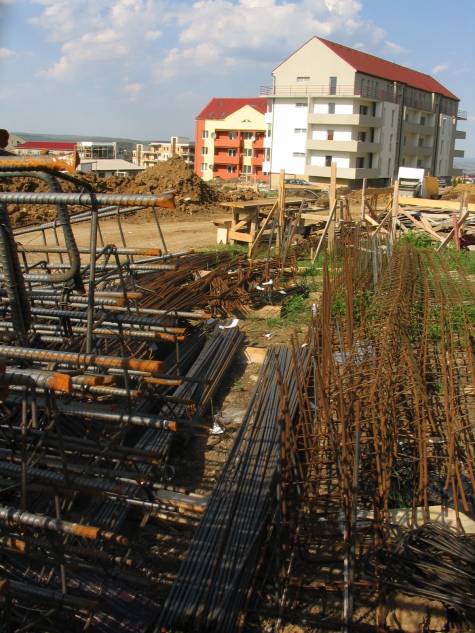
Urban contrast

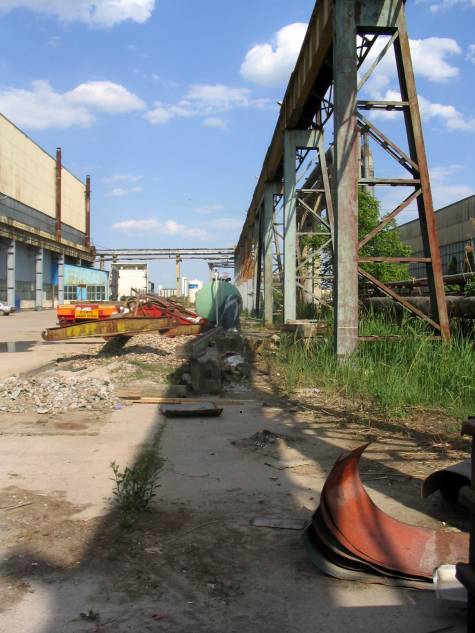
Romanian cities didn’t use to have suburbs or much of anything resembling living spaces on their outskirts. The outer ring was the land of giant factories, the heartland of soulless production, where metal once ruled and now rusts in peace.

Falling apart

As metal rusts on one edge of town, metal gives birth to new neighborhoods at the other. Cities are expanding, people are slowly gravitating outward, traffic jams have become common place, and metal is once again in fashion.

Building up

Photos taken in Cluj Napoca.

Living off a chicken’s ass

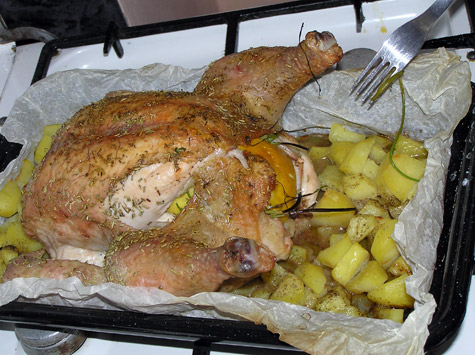
My Bucharest apartment is (still) largely empty. I barely have any clothes here, I am using kitchen utensils borrowed from my friends, and I live by the “3 things you buy first in a new apartment” list: an excruciatingly large amount of chips (because cooking this early on is out of the question), bedding (there’s something comforting about new sheets) and toilet paper (to ease the pain of the chips).

If you are lucky, you have friends who’ll come and attempt to cook a first meal using the paucity of equipment. They’ll even stuff whole lemons up a chicken’s ass and make it the smokiest meal you’ve seen in recent years. And it’ll be damn tasty! Thanks Jo!

Jo si puiu

Waiting in line

“Romania is the country where queuing is for idiots,” Karla writes on her blog. Navigating ques in Romania takes a particular degree of rudeness that foreigners, or us, Romanians returning from abroad, find puzzling and more irritating than locals do.

Karla’s anecdotes are funny and revealing. Last summer I got into a similar fight at the bank, when a guy cut in front of me. I usually don’t snap at strangers but that time I did, and I scolded the guy and his wife for having no manners. It felt lame afterwards to pull out the manners card, but I did feel better for a moment. I do wish I wouldn’t have to unload my social frustrations on strangers in banks though.

Horde mentality, cutting in line and giving others no privacy in public spaces remain largely foreign concepts in Romania. For example, last month when I came back, it began to feel like home the moment my fellow countrymen started shoving each other to board the Bucharest-bound plane in London. Romanians are so afraid of being left out that they’ll crowd into any space, assigned seats or not. What’s odder is that they also bum-rush the exits when it’s all done, as if to secure their place on Earth–which, by the way, we are the center of.

For the Romanian speakers among you, I’ll attach a top 10 of Romanian ques that I compiled in 2002 for FHM. It’s oddly current, although I’d place supermarket/hypermarket ques way higher if this were done today.

For the English speakers out there, the list includes ques at ATMs, supermarkets, cinemas, the post office and so on. Top of the list is waiting in line at the American embassy in order to get the visa that can get you away from it all.

And if you come back, you can be sure ques will be there for you.

Top 10 al cozilor:

10. Coada vacii.

Coada vacii este o coada cat se poate de romaneasca. La aceasta coada sta intreg poporul roman de vreme buna fara sa cracneasca. Fie ca vaca se numeste NATO, UE sau mai stim noi ce! De stat la coada vacii se sta.

9. Coada de la Bancomat.

Coada de la Bancomat e o gaselnita destul de recenta. Cu cativa ani in urma coada de la Bancomat se manifesta doar in cazul in care o intreaga familie posesoare de card-uri, dorea sa-si scoata niste bani. Cozile de la bancomate au cateva cauze determinanete pe langa cresterea numarului de carduri: nimeni nu vrea sa lase masinariei un comision (fie el cat de mic) si atunci cauta bancomatul bancii care i-a eliberat card-ul. Unde e foarte posibil ca 20% din cei ce stau la coada sa nu stie sa foloseasca card-ul, 10% sa-si uite pinul si 5% sa-l introduca gresit blocand automatul.

8. Coada de la supermarket.

Coada de la superkmarket tine in special de ora zilei in care te hotarasti sa-l vizitezi. Si pentru ca in Romania vizita la un supermarket este „la moda”, cozile apar si ele. In special in preajma serii cand te intorci de la servici si simti ca trebuie sa improspatezi stocul de beri, iar ea sa stea din nou cu minutele la raionul de cosmetice, desi a stat si ieri si cu doua zile in urma. si probabil nu va cumparara nimic. si cand te bucuri ca pleaca de la langa raft si vei putea iesi si tu din magazin vezi coada, unde alti barbati tristi stau cu cosul plin si prietena zambitoare asteptand sa ajunga odata acasa.

7. Coada de la cinematograf.

Fenomen ce iese de sub control in zilele cu reducere. Atunci desi e o singura ferestruica prin care se elibereaza biletele, coada este pe 3-4 randuri, fiecare sperand ca pe randul lui sa fie cei mai multi nesimtiti care sa se impuna acolo in fata. Nici de aici nu prea scapi caci daca ea vrea la film, ecran te faci. si atunci ajuti si tu cu un dram de nesimtire ca randul tau sa ajunga la casa. Iar daca nu poti, te adresezi vanzatorilor ambulanti si dai mai multi bani chiar decat pretul normal. Halal reducere!

6. Coada de la ghiseul de abonamente la metrou.

Aceasta coada ia amploare de doua-trei ori pe an, dar atunci trebuie sa lupti pentru supravietuire. In special dupa anul nou, cozile de la metrou nu sunt departe de peron, iar daca destinatia ta e Universitate, ora 11:00, iar tu vii de la Piata Unirii (evident cu gandul de a iti face mai intai abonament) ar trebui sa te prezinti la ghiseu la 9:00 si sa speri ca nu se va termina stocul de abonamente. Pentru ca o pedeapsa mai crunta decat a ajunge in fata unui ghiseu fara abonament nu este decat „saptamana fara sex” pe care ti-o mai impune din cand in cand consoarta.

5. Coada de la Posta.

Coada aflate in floare cand pensionarii vin sa-si ridice pensia. Stai acolo dupa ei, astepti sa se certe toti unul dupa altul cu „tovarasa” si apoi sa plece bombanind. Tu probabil ai de pus un plic sau de ridicat un colet, dar asisti la tabloul varstei a treia in Romania contemporana. Te intrebi invariabil de ce nu au fost acasa cand a venit postasul cu pensia (ca parca d-asta sunt pensionari!), iar cand ajungi la ghiseu te trezesti cat de marcat esti. iti ceri pensia, faci scandal ca nu e, iar cand ispravest lista de injuraturi ceri un timbru si pleci multumit. Asa da coada.

4. Coada de la Gara

Ea vrea vineri la munte/mare dar tu afli asta abia joi seara. Asa ca ajunsi vineri in gara, ea numai zambet, tu numai bagaje, incepe coada. Pentru ca din nou langa tine ii vezi pe „colegii” de la supermarket si ei cu bagaje si cu niste ele zambitoare. Dupa o ora de coada (asta pentru ca ai nimerit un week-end mai slab) si 2 bilete fara loc esti in cea mai buna forma pentru a o asculta pe ea bombanind despre cat de greu ii va fi sa stea in picioare.

3. Coada de la Farmacie.

Sa te puna dracu’ sa ajungi fara prezervative la mare. Pentru ca atunci incepe cu adevarat coada. La farmacie se sta precum in trecut la oua si ai mereu impresia ca iti lipseste tichetul. La cat stai acolo ajungi sa ii cunosti pe ceilalti baieti necajiti, iar cand ajungi sa cumperi te intrebi de ce dracu ai stat atata. Coada de la farmacie iti ofera, pe langa prilejul de a te intalni cu mai vechii prieteni din supermarket si de la gara si pe acela de a studia farmacista. Care va fi de doua tipuri: frustrata si intristata de barbatii bine care ii „pradeaza” farmacia, sau buna si amuzata de cum stati cu totii ca disperatii la coada.

2. Coada de la evidenta populatiei

Incearca pe cat se poate sa nu te muti, pentru ca altfel te vor apuca pandaliile. Iar daca trebuie sa o primesti pe ea la tine, mai bine ia-o intr-o chirie simbolica decat sa-i faci buletin pe adresa ta. Bine, probabil te va injura ca la usa cortului, dar inchide ochii. Pentru ca n-ai vazut iadul pana nu ai asteptat la coada la Serviciul de Evidenta al Populatiei. E unul din locurile in care vii cu doua ore inainte sa deschida si tot e tarziu - sunt cei care au venit chiar cu trei ore inainte! Locul in care nu-ti ajung niciodata hartiile pe care le ai la tine si locul unde cei aflati la coada nu sunt buni parteneri de discutie. Decat daca te pricepi la evolutia pretului la rosii si stii destule injuraturi la adresa birocratiei.

1. Coada de la Ambasada Americana

Trista coada. O coada mitica si imprevizibila. Toti cei care au stat la ea spera ca nu mai e nevoie sa mai stea vreodata. Cei care stau de mai multe ori dar la intervale mici sunt perseverenti si idealisti. Cei care stau de mai multe ori insa la intervale mari sunt norocosi. La aceasta coada nu vei sta pentru ca te pune ea, iar in cel mai optimist scenariu, stai pentru ca nu mai vrei cu ea la supermarket, munte sau mare. Celor de la ghiseu (dupa prea mult stat la coada) le spui diverse chestii numai adevarul nu. Caci tu stai la acea coada in speranta sa nu mai trebuiasca sa stai vreodata la altele.

Life 9

A little more than six months ago, Lavi coined the phrase “life 9,” to describe a series of decisions she decided she had to make: find a job and a place to live. “Life 9″ is “viata 9″ in Romanian, which, when the number is spelled out reads “viata noua,” which also means “new life.”

I loved the phrase because it played on the idea that life is a series of successive stages, and each time we move on to a new one, we make choices to get there. One thing we cannot do though is predict how happy we will be when we get there. Making choices and predicting how happy they will make us (they most often don’t because our prediction power sucks) is the thesis of a wonderful book called “Stumbling on Happiness.”

Choices, future happiness and assorted trivia of the human condition have always fascinated me, although the tendency to consume information on how our brains manipulate us has been exacerbated lately (those of you reading this blog don’t need to be reminded of that).

When, last October, I left Romania after a three months stint, I was skeptical that it was the right decision. I had spent such wonderful moments at home that I didn’t want to leave. I also made my dilemma known to friends and family, which has made my dad ask me numerous times: Wasn’t it the wrong decision? Wasn’t it just a waste of time?

Today, typing in an empty apartment in Bucharest, this time having returned home for an undisclosed period of time, I want to stress that the answer is: NO. There were things left for me to do in America, goodbyes to say, and I wanted some distance from a decision to return or not. In Boston I turned to books and essays, mostly by exiles, which explored longing, the myth of the impossible return and the pull of nostalgia. I often felt like a coward, saw myself as somebody who didn’t have the balls to make a decision and was hiding behind tomes of books to find an answer.

One freezing night this winter, I was having dinner with a friend in a Thai restaurant after having suffered through Pan’s Labyrinth. Rubbing my hands together, I was hopelessly stuck trying to tell her that talking about how people act and the ways in which they analyze their actions is easier in English than in Romanian. (My self-awareness works much better in English, maybe because it was the language it matured in.)

The point of the story is that she didn’t think language impotence was worthy of conversation. There were no deeper meanings or themes to analyze there. Things just are, why did for meaning?

Life is and life happens, but I believe that we can understand some of it. This is why I loved the book on happiness. It talks about the ways in which imagination fails us when we try to anticipate whether our choices will make us happy. Imagination cheats and it fills voids of knowledge with assumptions, it makes predictions on future states based on present ones, and it refuses to understand that once the future happens it can feel differently than we predicted. So if we can’t use our own selves to predict our happiness, what should we do? Daniel Gilbert suggests we do something most of us abhor, and I personally enjoy a great deal: take the experiences of others as a guide, because in the end, we are more similar than we think.

My friends laugh at me because I like to say a movie is good or bad before I watch it—a recent habit of mine. Of course, I rate movies on a subjective scale, where “good” means “I liked it”; it doesn’t mean “what an unworthy piece of art” (even though I often sound like I make that judgment call, too). I usually base what I say on the experiences of a few movie reviewers with whom I agree; to me, their experience of a movie is often a decent predictor of my own (Pan’s Labyrinth is one of the exceptions; I didn’t like it).

This is also why I believe “This American Life” to be the most amazing kind of journalism. The stories they tell are stories of people’s experiences and what they thought at the time they were engaging in them. You connect to some of them because you’ve felt the same, or you can take others as guides.

Last summer, before the whole “life 9″ phase, Lavi told me it was crap to feed on other’s people experiences rather than live them yourself. At the time, I did a shitty job of explaining why it’s not feeding on them that I was talking about. It’s treasuring them for the wealth of information they carry about who we are, who we were and who we might become if we take this road or that. Learning about the lives of others is not just a voyeuristic experience, but a reassuring and rewarding trip that can help us in turn.

As I write this, I’m working on my own “life 9,” one with the most unknowns of all I can remember. I have already made a few mistakes by allowing imagination to predict future events, but I soldier on as I prepare to make some of the important decisions Gilbert mentioned in his book: what to do, and with whom to do it.

But this time, I won’t be ashamed to look to others for inspiration (tomes of books and people included) while I revel in the happiness of the choices I have already made: where to live, and with whom to live with.

I am my mother’s son

Originally published December 2004 in Vox Magazine.

===

The Intercontinental Divide

I had not seen my mother in 314 days since we parted outside her apartment in Targu-Mures, Romania. But on the night of June 4, when she burst through the door of a New Orleans hotel room for our reunion, it seemed as though we had parted at lunch.

“Don’t you dare come home,” she said, dropping to the floor her blue plastic shoulder bag with the name of a drug company written on it. “I paid $40 on a cab to get me here from the airport. That’s a third of my monthly salary! You should stay in this country, where they will respect you and your work!”

Smiling, I replied, “Hi, Mom.”

My mother came to New Orleans for a medical conference. She is an oncologist, a medical specialist who deals with cancer and death. When my parents got divorced after 18 years of marriage, my mother reinvented herself by devoting her waking hours to my younger brother and me and her dying cancer patients. Our cat, Bubu, came third.

She makes peanuts in American dollars, the equivalent of a couple of grocery shopping sprees, but it’s enough in Romanian Lei to keep a third-floor, two-bedroom apartment on a street named after a Transylvanian poet, George Cosbuc.

She is alone there. My brother moved two hours away last September when he started college, and I had been away from home for five years, four of those in Bucharest. I would visit every three weeks, but these greet and eat sessions stopped two summers ago when I came to Columbia to earn a graduate degree in journalism.

Back in our bland Holiday Inn room off the highway, the scent of domestic familiarity lingered in the thick air. Especially because most of my mom’s luggage got lost in Atlanta. I was sharing the outrage and postponing the joy of our reunion. We had five days to get to that. We were busy being angry at Delta Airlines, the Romanian government and all institutions that give employees miserable rewards for their efforts. That night the list included the medical school where my mom teaches and the oncology clinic where she works.

This was the same energetic, strong, redheaded mom I had left behind, the same mom who thought I would have a brighter and lighter future in America because I wouldn’t worry about having money or being kicked around by an incompetent budding democracy.

While she smoked her last menthol cigarette in the lobby, I lay on my bed to draft a list of reasons for returning home to help a limp, Romanian journalism walk a straight line.

I knew my list of reasons could not include family, friends or the elusive idea of home. My mom’s family consists of two sons, and she would let both of us go if she thought we would be better off. She knows my Romanian friends are as practical as she is in matters of living without worries. And that night my mom was about to sleep in the clothes she had been wearing for 20 hours. She could spot cheap nostalgia and idealism the way I could spot potential party animals on Bourbon Street.

The conversation about my staying in America came up daily. We talked about it during breakfast as we enjoyed American free-coffee refills and scrambled eggs. We talked again when her luggage, wrapped in plastic because it had broken during transport, finally made it to New Orleans.

She tried to persuade me to stay using Maslow’s five-level pyramid of need, which argues that basic needs such as food, water or shelter are sometimes hard to satisfy. Even our visit to the National D-Day museum in New Orleans had a feeling of persuasion to it.

And of course, I heard the speech about her having to drive a Dacia, the stupid Romanian-made car, even though all the gangsters and post-communism profiteers cruised around in steel-gray BMWs.

I responded by pointing out that what she liked in America were things I couldn’t stand. I kept a small journal for the duration of the trip, in which I wrote at one point: “I just have to get her crazy, stupid tourist ideas out of her head. No bus tours, no organized $20-walking-tour rip-offs, no random things that looked colored enough for a picture.”

I even got her to agree on some things. America had too much political correctness, too much junk food and awful public transportation. America was also ignorant about the world. Then I tried to educate my mom in the things worth appreciating about America: not the malls, not the blow-out sales, not the $10 glittery sandals, but academic freedom, Whatchamacallit bars, increased personal safety and fascinating presidential politics. I even tried a lesson in American history.

“Hey, Reagan died,” I told her while we dined in a bar and watched TV.

“Hmmmm,” she replied.

To her, America wasn’t cool because of the media frenzy around Reagan’s death. It was cool because of voodoo dolls and soft beef steaks. The haziness and sugarcoated decadence of New Orleans didn’t do much to change our perennial dynamic.

But I had more fun observing our interaction than I ever had questioning it in the past. We parted at the airport over chicken salad after another expensive cab ride and my mom saying, “Think about staying,” and me replying with a smile, “Yes, Mom, I will.”

When I go home for Christmas, I’ll find the same mom who shops for ugly earrings for her sisters. I’ll be the same idealistic son who believes in a future at home. The New Orleans blues will be a Danube sad song, the alcohol-laden hurricane a cup of warm wine, the gumbo my mom’s eggplant salad. The background will change, but my mom and I will probably be the same.

Cup for mom

The Decemberists, writers of fictions

And I will hang my head, hang my head low
(The crane wife 3)

I was never one to appreciate music for production value, innovation, legacy and all the other attributes of “great legends.” I am of a more simple mind. If it moves me, I will embrace it and love it. If it doesn’t, it’ll fail.

That said, nothing has really ever moved me as much as Colin Meloy and The Decemberists. This post serves multiple functions: it’s an appreciation of the band, it’s a call for people to come to Vienna and see them live in September and it’s my own private form of exorcism.

My brother in arms
I’d rather I’d lose my limbs
Than let you come to harm
(The soldiering life)

The spring of 2005 was beautiful. I had my own little apartment in Columbia, Mo., which I had decorated with all sorts of second hand and vintage furniture picked out from Goodwill or the Salvation Army. I used to wake up to the sounds of National Public Radio, stroll along the living room barefoot, and yawn in terror at the hours I’d have to devote to reporting and editing. The projects I worked on that spring, including my master’s project, won’t be matched for a quite while. I really wasn’t doing much but being a journalist and loving it. I still do that occasionally, but there was something special about those days.

I fell on the playing field
The work of an errant heel
The din of the crowd and the loud commotion
Went deafening silence and stopped emotion
(The sporting life)

My master’s project required that I write a short weekly journal detailing how my work was going. As I always do when I’m assigned to write something that is not for publication, I made it highly personal. My journals then were a struggle to define my work and the vision I had for my journalism. As corny as some of them sound, it was some of the most honest writing I have ever done. There was so much passion in every journal entry that I wonder how (and when) can I bring it all back. I wrote:

What is journalism? This question has been racing through my brain for a couple of weeks and it popped up every five seconds during a recent Missourian brainstorm meeting on the Islam story. As we went around the table, we were not only talking about various angles, ideas and approaches to the story – we were sharing and debating our definitions of journalism, our ways of telling stories.

Let me back up a little.

I have been searching for a personal definition of journalism for close to six years now. What is the goal and purpose of MY journalism? Yes, there is the mission of the profession as a whole, but whether we are conscious or not, we all have a way of interpreting and applying it. My journalism has slowly, but surely, pushed me in the direction of explanation, telling the story of the story, tackling ideas not events, having people stand in for phenomena.

All I heard was a shout
of your brother calling me out
and you ran like a fool to my side
and the shot it hit hard
and your frame went limp in my arms
and a lull of love was your dying cry
(O Valencia)

How easy it all seems when the only question that plagues your day is: “What is journalism?” Did I find an answer? Not a final one, but I did find a working definition:

What is journalism? Journalism is the ability and the opportunity to share stories of the world and the people in it with those around you.

It’s not perfect yet, but I can live with it for now. The key word is sharing. As a journalist, one has the opportunity to immerse in a phenomenon or someone’s life. He probably influenced it just as much as it influences him. And he brings back a story that hopefully explains the world a little better. (…)

Here’s an image. Journalism can be a tennis ball: fast, easy to handle, easy to look at and easy to discard. But what if journalism was a gigantic Earth shaped sphere? It would be slow, complicated, hard to handle but hard to forget about and ignore. And then a good story gives it the needed push and once it’s in motion, one can’t take their eyes off it. Every few rolls something else catches your eye and you make note of it going “wow.” The imagery changes, the speed varies and the experience is profound.

And we’ll remember this when we are old and ancient
Though the specifics might be vague
And I’ll say your camisole was a sprightly light magenta
When in fact it was a nappy bluish grey
(July, July)

So what does all this have to do with The Decemberists you ask. Everything. First of all, it was in the spring of 2005 that I heard a song that broke my heart. It was called “We both go down together” and it was about two lovers committing suicide by jumping of “the cliffs of Dover.” The song was by was off their recently released “Picaresque,” which was the best record I’ve heard that year. Second of all, the Decemberists did with music what I wanted to do with journalism–they told intensely personal stories. On Picaresque they had the feel of medieval Gothic ballads set to slow strumming guitars, violins, mandolins and what have you. They were songs of death, fear, tragedy, but played in an oddly upbeat, yet appropriate way.

Here on these cliffs of Dover
So high you can’t see over
And while your head is spinning
Hold tight, it’s just beginning
(We both go down together)

I’m not ashamed to admit I discovered the Decemberists late (they started in 2001 and had produced plenty of music before “Picaresque”). I’m not ashamed because I embraced them so completely that I felt I never skipped a beat of their existence. Almost everything you read about the Decemberists will talk about Colin Meloy and his lyrics. The man loves big words, loves tragic stories, and loves performing them.

Pretty hands do pretty things when pretty times arise
Seraphim and seaweed swim where stick-limbed Myla lies
(Song for Myla Golberg)

I saw them the first time in Washington, DC and I loved it. The Decemberists are a soft band, they don’t “rock” in the traditional way. But the way the throw themselves into their more up tempo material is riveting and addictive. I left buzzing, wanting more–more stories, more songs, more of this experience. Here is the thing with a good story, or rather with how I react to one. My knees go weak, my heart starts racing and my mind starts screaming and running in circles. It engulfs, enthuses me and brings out unrelenting joy. I have a hard time explaining that I can divorce content from execution and intent. Tell me a sob story in which children die from cancer and I will sit there teary eyed and joyous. Because it was beautiful, because it did real life justice, because it taught me something valuable and it made me feel more connected to the world. Take the lyrics I treasure most from the Decemberists (see below). To me, the words of “Engine driver” speak to the need of telling the stories of your life and the lives of others–as a way of exorcising pain and pleasure, but also as a way to give something to the world.

And I am a writer, writer of fictions
I am the heart that you call home
And I’ve written pages upon pages
Trying to rid you from my bones
(Engine driver)

There is one more aspect to telling stories. Good stories can make you feel differently depending on the context. I married most bands to the context I discovered them in. I have a hard time separating The Arcade Fire from the small venue I first saw them in. Something Corporate will always conjure the smell of screaming teenagers smelling like vanilla. Guster will always be a road-trip soundtrack. When I brought the Decemberists to Romania in the summer of 2006, “We both go together” played and mean different things. So did “Engine driver.” And it is here that I first heard “O Valencia” and their latest album, “The Crane Wife.”

So be kind to your mother, though she may seem an awful bother,
and the next time she tries to feed you collard greens,
Remember what she does when you’re asleep.
(A cautionary song)

Before I left America, I went to two Decemberists shows back to back in Boston (no. 3 and 4). The first one was good, but my friend wasn’t fully into it, so we sat to the side, taking in the songs and the joyous crowd (both shows were sold out). But the second night I went up front to scream and sing my heart out. That night I kept thinking about leaving, thinking about the times I had in the US, the stories I heard and told, and the stories I will hear and tell in Romania. I was sad and overjoyed at the same time. It’s this time of one’s life when the Decemberists work best. They are an outlet for sadness and a tremendous source of joy.

I stepped out of the Avalon into the last snow of the season with tears in my eyes. As I slowly walked towards the subway, I couldn’t help repeating the mantra of one of the band’s closers, “Sons and daughters.” Somewhere, in an evil world, an unkind life, a bad day, the dark clouds will part. And as tragedy fades, joy eventually sets in. The Decemberists know that. It’s their story and it’s my story. And if you think about it a little, it’s your story, too.

See you in Vienna.

When we arrive, sons & daughters
We’ll make our homes on the water
We’ll build our walls of aluminum
We’ll fill our mouths with cinnamon now
Hear all the bombs, they fade away
(Sons and Daughters)

The Decemberists

PS: Here is a Decemberists “best of,” fitting perfectly on an 80 minute CD. If assembling that sounds like too much work, stream the band at Hype-Machine or on their website.

1. The Decemberists - The crane wife 3 (4:20)
2. The Decemberists - The soldiering life (3:48)
3. The Decemberists - The sporting life (4:40)
4. The Decemberists - O Valencia (3:45)
5. The Decemberists - July, July (2:53)
6. The Decemberists - Summersong (3:27)
7. The Decemberists - Oceanside (3:29)
8. The Decemberists - Los Angeles, I’m yours (4:16)
9. The Decemberists - The engine driver (4:17)
10. The Decemberists - We both go down together (3:06)
11. The Decemberists - The chimbley sweep (2:53)
12. The Decemberists - Here I dreamt I was an architect (4:29)
13. The Decemberists - Red right ankle (3:29)
14. The Decemberists - A cautionary song (3:08)
15. The Decemberists - Sixteen military wives (4:54)
16. The Decemberists - Eli, the barrow boy (3:13)
17. The Decemberists - Song for Myla Goldberg (3:33)
18. The Decemberists - The mariner’s revenge song (8:47)
19. The Decemberists - Sons and daughters (5:13)